

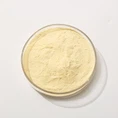

The principle of natural fermentation of calcium propionate mainly includes the following aspects:
Antibacterial effect: Calcium propionate decomposes into propionic acid under acidic conditions, and propionic acid has antibacterial effect. Propionic acid can form high osmotic pressure outside the mold cell, causing the mold cell to dehydrate, thereby inhibiting its growth. In addition, propionic acid can penetrate the mold cell wall, inhibit the enzyme activity in the cell, and further prevent the reproduction of mold.
Anti-mold effect: The free propionic acid produced by the decomposition of calcium propionate under acidic conditions has an anti-mold effect. This anti-mold effect is affected by the moisture and pH value in the feed. Propionate is non-volatile, high temperature resistant and less irritating, and is suitable for long-term storage of feed products.
Chemical properties: The chemical formula of calcium propionate is C6H10CaO4, usually expressed as 2(C3H5O2)·Ca, and the molecular weight is about 186.22. It is easily soluble in water, slightly soluble in ethanol, and insoluble in ethers. Calcium propionate is sensitive to light and heat, is easily deliquescent in humid air, and decomposes into calcium carbonate under high temperature conditions.
Application areas: Calcium propionate is not only widely used in food and feed, but also used as a leavening agent in fermented flour products. It helps the dough expand by promoting the release of carbon dioxide in the dough, making the finished food softer.
In addition, calcium propionate also plays an important role in dairy cow breeding, which can supplement calcium ions, increase blood calcium concentration, prevent milk fever, avoid ketosis, provide energy and relieve heat stress.