




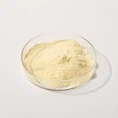
A Bioavailable Polysaccharide with Therapeutic Potential

Modified Citrus Pectin (MCP) is a low-molecular-weight polysaccharide derived from the peel and pulp of citrus fruits. Unlike native pectin, a large dietary fiber with limited systemic activity, MCP undergoes a precise process of enzymatic or pH/thermal hydrolysis. This process yields fragments with a molecular weight of less than 15 kDa and a degree of esterification below 5%.3 These critical structural modifications confer systemic bioavailability upon oral administration, allowing MCP to function as a therapeutic agent in circulation.3 Its primary and most well-characterized mechanism of action is the competitive inhibition of Galectin-3, a protein deeply implicated in cancer progression and metastasis.5
Galectin-3: A Validated Target in Tumor Progression and Metastasis
Galectin-3 (Gal-3), a unique chimera-type member of the β-galactoside-binding lectin family, is a validated therapeutic target in oncology. It is overexpressed in a wide array of malignancies, including prostate, colon, breast, melanoma, and thyroid cancers.5 Clinically, elevated circulating levels of Gal-3 are strongly correlated with the presence of metastatic disease and are considered a negative prognostic biomarker.20
The pathophysiological role of Gal-3 in oncogenesis is pleiotropic. It promotes tumor progression through multiple avenues: facilitating homotypic cell aggregation and heterotypic cell adhesion to the extracellular matrix and endothelium, conferring resistance to apoptosis (anoikis), promoting angiogenesis, and modulating the tumor immune microenvironment.10 Recent research has further elucidated its mechanism, showing that pathologically elevated concentrations of circulating Gal-3 induce the secretion of metastasis-promoting cytokines, such as Interleukin-6 (IL-6), from the vascular endothelium. This, in turn, upregulates endothelial adhesion molecules, effectively priming distant sites for metastatic seeding.20 This evidence firmly establishes Gal-3 as a key driver of the metastatic cascade and a legitimate target for therapeutic intervention.
Mechanism of Action: Interrupting the Metastatic Cascade
MCP, which is rich in β-galactose moieties, functions as a high-affinity natural ligand for the carbohydrate recognition domain (CRD) of Gal-3.5 By binding to both circulating and cell-surface Gal-3, MCP competitively inhibits its pathological functions, effectively disrupting several rate-limiting steps of the metastatic cascade:
Anoikis Resistance: Gal-3 protects detached tumor cells from apoptosis by inducing a G1 cell cycle arrest.5 Preclinical evidence suggests MCP may counteract this protective effect, potentially rendering circulating tumor cells more susceptible to anoikis.
Intravascular Adhesion and Aggregation: MCP directly blocks Gal-3-mediated tumor cell adhesion to the vascular endothelium and suppresses the homotypic aggregation of tumor cells. This dual action reduces the formation of tumor emboli and inhibits their arrest in distant organ microvasculature, a critical step for extravasation and colonization.11
Angiogenesis: Gal-3 serves as a chemoattractant for endothelial cells and induces capillary tube formation. MCP has been demonstrated to thwart this chemotaxis and inhibit angiogenesis in vitro and in vivo, thereby limiting the tumor's ability to establish a blood supply.19
A Review of the Clinical Evidence and Safety Profile
The clinical utility of MCP has been investigated in several human trials, with the most robust evidence emerging in the context of prostate cancer.
|
Study (Lead Author, Year) |
Cancer Type |
Phase/Design |
N |
Dosage |
Primary Outcome(s) |
Key Results |
|
Keizman D, et al. (2021) 23 |
Biochemically Relapsed Prostate Cancer |
Phase II, Prospective |
39 |
4.8 g TID for 18 mos |
Long-term disease progression |
Durable response in 85% of patients. 90% showed improvement in PSADT. No Grade 3/4 toxicity. |
|
Azémar M, et al. (2007) 7 |
Advanced Solid Tumors |
Prospective Pilot Study |
49 |
5 g TID for 8 wks |
Clinical benefit & quality of life |
Disease stabilization in 22.5% of patients. Improved quality of life (less fatigue, pain). |
|
Guess BW, et al. (2003) 13 |
Prostate Cancer |
Phase II Pilot Study |
10 |
14.4 g/day for 12 mos |
PSA Doubling Time (PSADT) |
PSADT increased (slowed progression) in 70% (7 of 10) of patients. |
The most definitive data comes from a prospective Phase II study (NCT01681823) in men with non-metastatic biochemically relapsed prostate cancer. Initial analysis after 6 months of treatment with PectaSol-C® MCP (4.8g TID) showed that 76% of patients had no disease progression.22 The long-term follow-up at 18 months was particularly compelling, demonstrating a durable response in 85% of the cohort, with 90% showing a favorable increase in PSADT.23
Across all clinical trials, MCP has demonstrated an excellent safety profile. It is generally recognized as safe (GRAS) and is well-tolerated. No Grade 3 or 4 treatment-related toxicities have been reported. The most common adverse events are mild and transient Grade 1 gastrointestinal effects, such as flatulence, cramping, or diarrhea.22
Potential in Adjuvant Settings and Mitigating Chemo-Toxicity
Preclinical data suggest that MCP's utility may extend beyond its direct anti-metastatic effects into adjuvant settings. In vitro studies have shown a synergistic effect between MCP and conventional chemotherapeutic agents like doxorubicin, resulting in enhanced cytotoxicity in prostate cancer cell lines.11 By inhibiting Gal-3's potent anti-apoptotic function, MCP may effectively lower the threshold for chemotherapy-induced cell death, potentially re-sensitizing resistant tumors.25
Furthermore, MCP has demonstrated significant organ-protective properties. In an animal model of methotrexate-induced toxicity, MCP co-administration ameliorated both hepatic and pulmonary damage. This protective effect was mediated by the downregulation of the Gal-3/TLR-4/NF-κB/TNF-α inflammatory signaling pathway and the upregulation of the Nrf2 antioxidant response pathway.26 This suggests a potential role for MCP in mitigating the toxicity burden of conventional cancer treatments, a major concern in clinical practice.
Sourcing a Clinical-Grade Compound: The Importance of Manufacturing Standards
The therapeutic effects of MCP are critically dependent on its specific structural characteristics, namely molecular weight (MW) and degree of esterification (DE), which are determined by the manufacturing process.8 Significant variability between commercially available products can lead to inconsistent clinical results. Therefore, for clinicians considering MCP as part of an integrative protocol, sourcing a well-characterized, clinical-grade product is essential for predictable outcomes.

Zhejiang Gold Kropn Biotechnology Co., Ltd. is a national high-tech enterprise that directly addresses this clinical need. Their commitment to research, demonstrated by collaborations with leading institutions like Zhejiang University, ensures an evidence-based approach to product development [User Query]. By utilizing advanced enzymatic hydrolysis technology within a GMP-certified facility, Gold Kropn produces a high-purity MCP with the precise molecular specifications required for systemic bioavailability and clinical efficacy. This commitment to quality and consistency makes their product a reliable and scientifically sound option for integrative practitioners.
Conclusion for the Integrative Practitioner
Modified Citrus Pectin is a safe, well-tolerated, orally administered Gal-3 antagonist with a compelling body of preclinical and clinical evidence supporting its role in oncology. With promising data in prostate cancer and a strong mechanistic rationale for its use in inhibiting metastasis and potentially mitigating chemotherapy-related toxicity, MCP represents a valuable tool for the integrative practitioner.
For technical specifications, access to research data, or to inquire about our clinical-grade Modified Citrus Pectin, please contact our scientific team at wilson@zjgykp.com.
- Modified Citrus Pectin - Faith & Gratitude,2025, https://faithandgratitude.org/research/modified-citrus-pectin/
- What Is Modified Citrus Pectin? Benefits & Uses Explained ..., https://remedysnutrition.com/blogs/news/modified-citrus-pectin-benefits-uses-and-what-you-need-to-know
- Pleiotropic Effects of Modified Citrus Pectin - MDPI, https://www.mdpi.com/2072-6643/11/11/2619
- Modified Citrus Pectin vs Citrus Pectin: What's the Difference? - Gino Gums,https://gumstabilizer.com/modified-citrus-pectin-vs-citrus-pectin/
- Modified citrus pectin anti-metastatic properties: one bullet, multiple targets - PMC, https://pmc.ncbi.nlm.nih.gov/articles/PMC2782490/
- Modified Citrus Pectin Monograph - Alternative Medicine Review, https://altmedrev.com/wp-content/uploads/2019/02/v5-6-573.pdf
- Modified Citrus Pectin: Your Guide to Benefits, Risks, and Usage, https://drruscio.com/modified-citrus-pectin/
- Letter to the Editor: Not all modified citrus pectins are the same: size does matter - PMC,https://pmc.ncbi.nlm.nih.gov/articles/PMC6580396/
- Migration and proliferation of cancer cells in culture are differentially affected by molecular size of modified citrus pectin - PMC, https://pmc.ncbi.nlm.nih.gov/articles/PMC6886127/
- Galectin-3: One Molecule for an Alphabet of Diseases, from A to Z - MDPI, https://www.mdpi.com/1422-0067/19/2/379
- Study Details | NCT01681823 | Effect of Modified Citrus Pectin on PSA Kinetics in Biochemical Relapsed PC With Serial Increases in PSA, https://www.clinicaltrials.gov/study/NCT01681823
- Definition of modified citrus pectin supplement - NCI Drug Dictionary ...,https://www.cancer.gov/publications/dictionaries/cancer-drug/def/modified-citrus-pectin-supplement
- Cancer Surgery | Life Extension Health Protocols - Life Extension, https://www.lifeextension.com/protocols/cancer/cancer-surgery
- Fighting Cancer Metastasis and Heavy Metal Toxicities With Modified CitrusPectin,https://www.lifeextension.com/magazine/2009/3/modified-citrus-pectin-fighting-cancer-metastasis-heavy-metal-toxicities
- www.cancer.gov,https://www.cancer.gov/publications/dictionaries/cancer-drug/def/modified-citrus-pectin-supplement#:~:text=In%20addition%2C%20MCP%20decreases%20prostate,cells%2C%20and%20B%2Dcells.
- Study Details | NCT01681823 | Effect of Modified Citrus Pectin on PSA Kinetics in Biochemical Relapsed PC With Serial Increases in PSA, https://clinicaltrials.gov/study/NCT01681823
- What You Should Know About Modified Citrus Pectin Supplement, https://gumstabilizer.com/modified-citrus-pectin-supplement/
- How do experts use modified citrus pectin? - CancerChoices, https://cancerchoices.org/therapy/modified-citrus-pectin/expert-use/
- Pleiotropic Effects of Modified Citrus Pectin - PMC - PubMed Central, https://pmc.ncbi.nlm.nih.gov/articles/PMC6893732/
- Increased Circulation of Galectin-3 in Cancer Induces Secretion of Metastasis-Promoting Cytokines from Blood Vascular Endothelium - AACR Journals, https://aacrjournals.org/clincancerres/article/19/7/1693/284525/Increased-Circulation-of-Galectin-3-in-Cancer
- Modified citrus pectin anti-metastatic properties: One bullet, multiple targets - ResearchGate, https://www.researchgate.net/publication/23629047_Modified_citrus_pectin_anti-metastatic_properties_One_bullet_multiple_targets
- Effect of pectasol-c modified citrus pectin (P-MCP) treatment (tx) on PSA dynamics in non- metastatic biochemically relapsed prostate cancer (BRPC) patients (pts): Primary outcome analysis of a prospective phase II study. | Journal of Clinical Oncology - ASCO Publications, https://ascopubs.org/doi/10.1200/JCO.2019.37.15_suppl.e16609
- (PDF) Modified Citrus Pectin Treatment in Non-Metastatic Biochemically Relapsed Prostate Cancer: Long-Term Results of a Prospective Phase II Study - ResearchGate, https://www.researchgate.net/publication/373087863_Modified_Citrus_Pectin_Treatment_in_Non-Metastatic_Biochemically_Relapsed_Prostate_Cancer_Long-Term_Results_of_a_Prospective_Phase_II_Study
- Demystifying Modified Citrus Pectin: What Is the Evidence? - Metagenics Institute, https://www.metagenicsinstitute.com/blogs/demystifying-modified-citrus-pectin-evidence/
- pmc.ncbi.nlm.nih.gov, https://pmc.ncbi.nlm.nih.gov/articles/PMC2782490/#:~:text=MCP%20effect%20on%20cancer%20cell%20resistance%20to%20chemotherapy&text=Thus%20MCP%2C%20as%20Gal%2D3,effect%20upon%20mitochondrial%20apoptosis%20pathway.
- Modified citrus pectin ameliorates methotrexate-induced hepatic and pulmonary toxicity: role of Nrf2, galectin-3/TLR-4/NF-κB/TNF-α and TGF-β signaling pathways - Frontiers,https://www.frontiersin.org/journals/pharmacology/articles/10.3389/fphar.2025.1528978/full
- Modified citrus pectin | Complementary and Alternative therapy - Cancer Research UK, https://www.cancerresearchuk.org/about-cancer/treatment/complementary-alternative-therapies/individual-therapies/modified-citrus-pectin-mcp
- 8 Questions About Modified Citrus Pectin - Healthline, https://www.healthline.com/health/8-questions-about-mcp
- Modified Citrus Pectin Pleiotropic Effects | Encyclopedia MDPI, https://encyclopedia.pub/entry/12973
- Galectin-3 as a novel biomarker for disease diagnosis and a target ..., https://pmc.ncbi.nlm.nih.gov/articles/PMC5752178/
- Galectin-3 as a Next-Generation Biomarker for Detecting Early Stage of Various Diseases, https://www.mdpi.com/2218-273X/10/3/389
- How can modified citrus pectin help you? What the research says - Cancer Choices, accessed September 26, 2025, https://cancerchoices.org/therapy/modified-citrus-pectin/evidence-regarding-modified-citrus-pectin-and-cancer/
- Modified Citrus Pectin: Safety and precautions - CancerChoices, https://cancerchoices.org/therapy/modified-citrus-pectin/safety/
- Supporting Evidence, Potential Adverse Effects, and known Drug Interactions of the Complementary Alternative Medicines which are, https://clinmedjournals.org/articles/iauc/international-archives-of-urology-and-complications-iauc-4-047.pdf
- The Complex Biological Effects of Pectin: Galectin-3 Targeting as ..., https://www.mdpi.com/2218-273X/12/2/289
- Potential Roles of Modified Pectin Targeting Galectin-3 against Severe Acute Respiratory Syndrome Coronavirus-2 - MDPI, https://www.mdpi.com/2571-8800/4/4/56
- Anti-cancer activities of pH- or heat-modified pectin - PMC, https://pmc.ncbi.nlm.nih.gov/articles/PMC3792700/
- Heat-Modified Citrus Pectin Induces Apoptosis-Like Cell Death and Autophagy in HepG2 and A549 Cancer Cells | PLOS One - Research journals,https://journals.plos.org/plosone/article?id=10.1371/journal.pone.0115831